
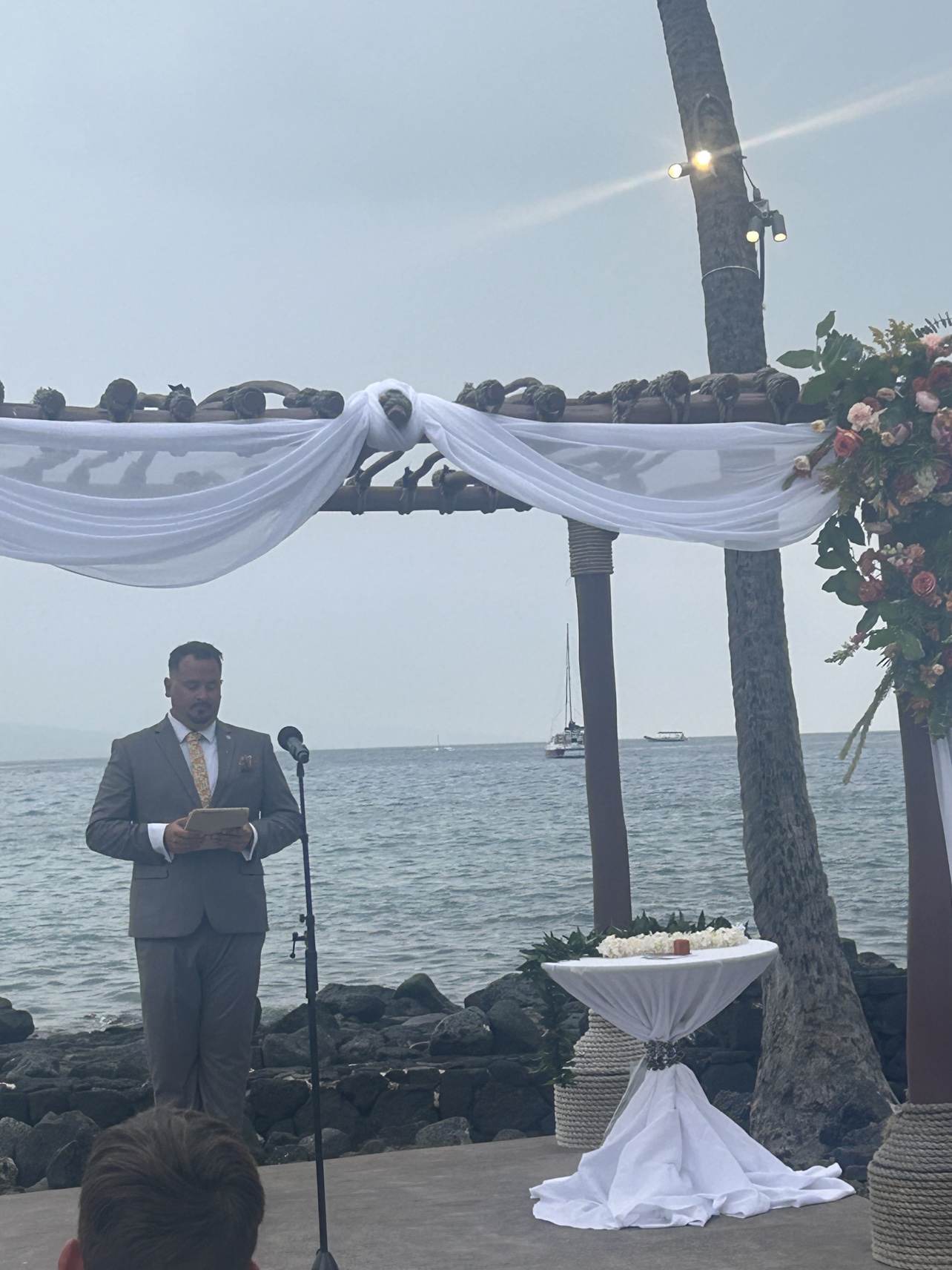
The right officiant does more than stand at the front and read. They listen closely, bring calm to the room, and help the ceremony sound like the two people getting married—not like anyone else’s script.
Sonoma County gives couples an extraordinary range of settings: vineyards and gardens, redwood groves, ranches, coastal overlooks, and intimate celebrations at private homes. The person leading your ceremony should understand that the setting changes the practical details, but never becomes more important than the promise you are making.
Begin With the Conversation
Before you compare packages, have a real conversation. You should leave it feeling heard. A thoughtful Sonoma wedding officiant will ask how you met, what you value in one another, what tone feels natural, and what you do—or do not—want included.
Pay attention to how the officiant responds when your ideas are still forming. Good guidance feels collaborative, not prescriptive. You may know you want something warm but not overly sentimental, spiritual but not tied to one tradition, or short without feeling rushed. Your officiant should be able to translate that into a clear ceremony plan.
Ask How the Ceremony Is Written
“Personalized” can mean many things. Ask what material the officiant gathers from you, whether you will discuss your story together, and when you will see the ceremony structure. You should understand how readings, rituals, family acknowledgments, and personal vows fit into the whole.
I like to think of a ceremony as having a natural arc: a welcome that settles everyone, a reflection on the couple, the vows and rings, and a joyful conclusion. The shape is familiar, but the language should belong to you. That is the difference between a ceremony that merely fills time and one your guests remember.
Look for Outdoor Awareness
Many Sonoma ceremonies happen outdoors, where small details matter. Ask your officiant how they handle:
- Sound. Will guests be able to hear the welcome and the vows over wind, nearby activity, or an open landscape?
- Light and placement. Can the ceremony team avoid harsh sun in your eyes while still giving the photographer a clean view?
- Temperature. Is the ceremony length sensible for a hot afternoon or a cool evening?
- A weather change. If the ceremony moves under cover, can the plan adapt without losing its warmth?
- Venue coordination. Who confirms the processional cues, microphone, license signing location, and final start time?
Your officiant does not need to replace your planner, but they should understand how their part connects to everyone else’s. Calm coordination is especially valuable in the final minutes, when the couple should be thinking about each other—not where the reading copy went.
Make Sure the Legal Details Are Clear
Ask who will review the marriage license, who needs to sign it, and what happens after the ceremony. Requirements can depend on the license you obtain, so confirm the current details with the California county clerk that issues it. Your officiant should be prepared to guide the signing and complete their portion carefully.
It is also fair to ask about backup plans. What happens if the officiant becomes ill? How early will they arrive? Will the agreement clearly show the date, place, payment schedule, travel, rehearsal terms, and what is included? Clear answers now create a relaxed day later.
Choose the Person Who Helps You Feel Present
Style matters. Some couples want playful and conversational; others want grounded, traditional, spiritual, or wonderfully simple. There is no correct tone. The best fit is the officiant whose presence lets you stop performing and simply be in the moment.
My hospitality background taught me that care is often felt in details no one else sees: arriving prepared, remembering names, reading the room, and quietly adjusting when the day changes. That is what I bring to ceremonies across Sonoma, Napa, and Mendocino counties.
When you choose your Sonoma wedding officiant, choose someone you trust with both the words and the atmosphere around them. The ceremony should feel considered, comfortable, and completely yours.