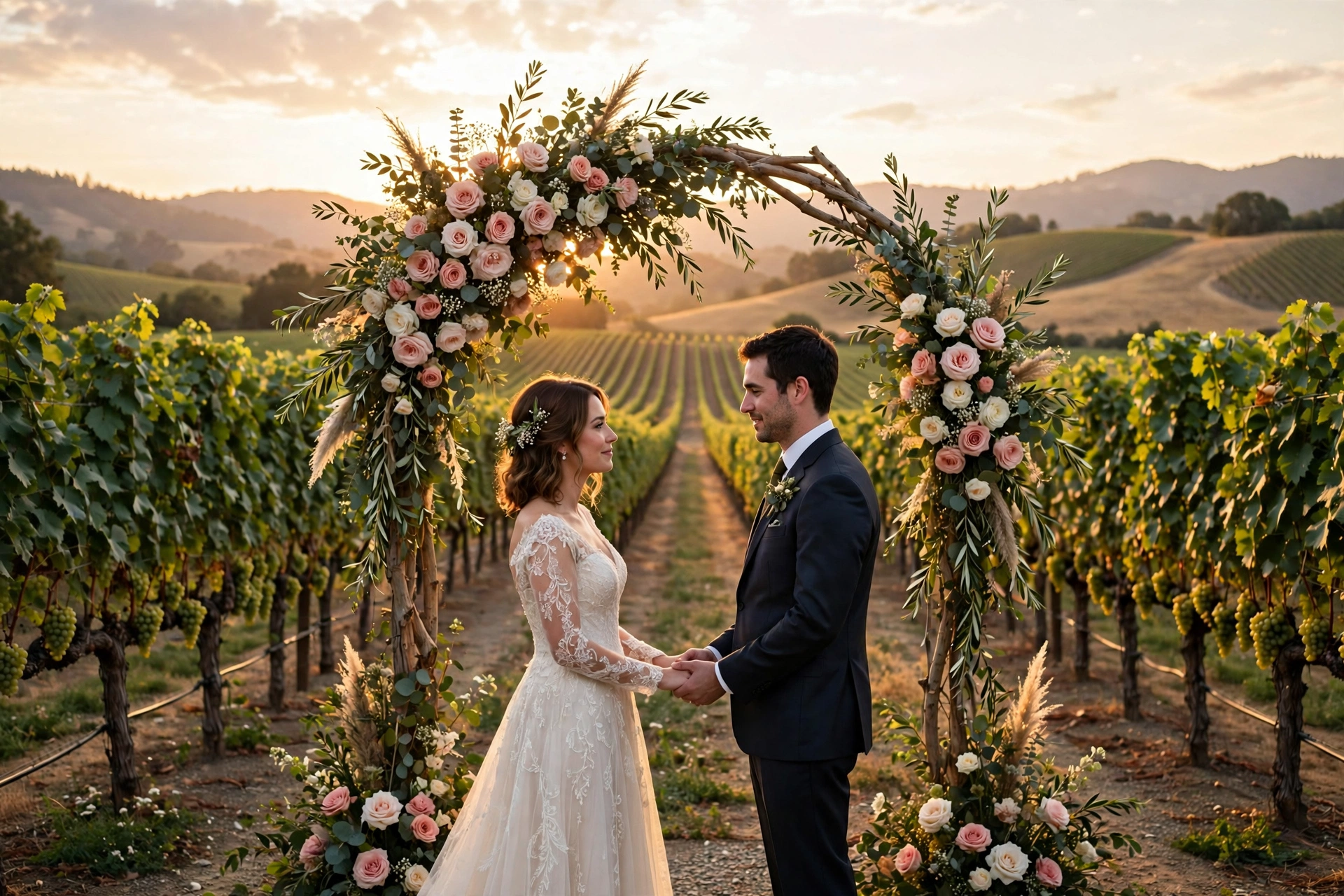
There is a reason so many couples picture their wedding in a vineyard: golden light, long rows of vines, and a glass of something local in every hand. But a winery wedding is also a working farm, a tasting room, and a business with its own rules — and the couples who have the smoothest day are the ones who plan for the vineyard, not just the photograph.
This guide walks through how winery weddings in Sonoma County actually work: what to ask the venue, what the ceremony needs, and the small logistics that make the difference between a beautiful day and a stressful one.
Start With the Kind of Winery
Not every winery hosts weddings the same way. Some have a dedicated events team and a ceremony lawn built for two hundred guests. Others are small, family-run tasting rooms that will clear the crush pad for thirty of your favorite people and call it a wedding. Neither is better — but they ask different things of you.
Before you fall in love with a view, ask: how many guests can the ceremony site actually seat? Is the ceremony space separate from the tasting room, or will visitors be wandering through? What time does the event have to end, and what does the rain plan look like? The answers will tell you more about your day than any photo gallery.
Five Questions to Ask Before You Book
- Can we bring our own officiant? Some venues have a preferred-vendor list; most will welcome an officiant you choose, but confirm it in writing before you sign. A ceremony written around your story is worth protecting early.
- What does the rental actually include? Chairs, a sound system, a getting-ready space, and cleanup are sometimes included and sometimes line items. Get the list, not the vibe.
- Where does the sun go? A west-facing ceremony lawn at 5 PM in July is a squinting contest. Ask where the sun sets relative to the arch, and time the ceremony so the light is behind the photographer, not in your eyes.
- How does sound carry outdoors? Vineyards are open and often breezy. A small portable speaker and a microphone for the officiant are not luxuries — they are how your back row hears the vows.
- What happens if it rains? Sonoma rain is rare in summer and real in winter. A venue with a barn, barrel room, or covered patio as a backup is worth more than a perfect forecast.
The License, in Brief
Your marriage license comes from the county, not the winery. In Sonoma County, you apply through the Clerk-Recorder's office in Santa Rosa: a public license is $82 and a confidential license is $98, there is no waiting period and no blood test, and the license is valid for 90 days. Bring it to the ceremony — your officiant signs it with you and your witnesses, and files it afterward. The full walkthrough is in my Sonoma County marriage license guide.
Ceremony Logistics Worth Planning Early
Timing. Golden hour in wine country is genuinely golden, but it moves fast. A ceremony that starts 90 minutes before sunset gives you soft light for the vows and time for portraits before the light goes. Midday summer ceremonies are bright and hot — shade, water, and shorter readings are kindnesses your guests will remember.
Seating and shade. Vineyard rows are beautiful and uneven. Check whether the ground is flat enough for chairs and for any guests with mobility needs, and whether the venue provides shade or you should plan a start time that avoids the hottest hour.
Wine in the ceremony. Many couples weave wine into the ritual itself — a blending of two wines into one glass, for example, which is the signature ritual I offer as part of any package. If your venue pours its own wine, confirm that a ceremonial pour is allowed; most are delighted, but ask.
Photography. Tell your photographer where the ceremony faces and when the light peaks. The best vineyard portraits happen in the twenty minutes after the ceremony, while the light is still warm and the guests are heading to cocktails.
What Does a Winery Wedding Cost?
Venue rental varies enormously — from a few thousand dollars at a small tasting room to much more at a large estate — so get quotes from two or three venues before you anchor a budget. My own officiant packages are fixed and simple: The Elopement $400, The Intimate $650, and The Signature $950, with travel included across Sonoma, Napa, and Mendocino, and a 50% retainer to reserve your date. The full breakdown is in my guide to officiant costs in Sonoma and Napa.
A Simple Timeline That Works
- 9–12 months out: tour venues, ask the five questions above, and book the one whose answers you liked.
- 6 months out: book your officiant and photographer, and agree on the ceremony time with the sun in mind.
- 2 months out: apply for your marriage license window (remember: valid 90 days), finalize readings and music, and confirm the rain plan.
- 2 weeks out: final headcount, seating plan, and a walkthrough of the ceremony site with your officiant if you can manage it — or a rehearsal, included with The Signature.
A winery gives you the setting. The ceremony is what makes it a wedding. Choose a venue whose rules you understand, an officiant who writes for you specifically, and a time of day the light loves — and the vineyard will do the rest.
Do wineries require you to use their officiant? Some have preferred vendors, but most Sonoma wineries let you bring your own officiant. Confirm it in writing before you sign the venue contract.
How far ahead should we book a winery venue? Popular venues book 9–12 months out for Saturdays in peak season; weekdays and winter dates often have much more availability.
Can we have the ceremony and reception at the same winery? Yes — most winery venues are set up for exactly that, with a ceremony lawn or garden and a separate reception space. Ask how the flip between the two is handled.
What if it rains? Ask for the venue's backup space before booking: a barn, barrel room, or covered patio. A venue with a real rain plan is worth choosing over one with only a forecast.